If you love clean lines, indoor-outdoor living, and homes with real architectural character, Walnut Creek deserves a closer look. For many buyers, the challenge is telling the difference between a true Eichler, an Eichler-style home, and a broader mid-century ranch. This guide will help you understand Walnut Creek’s mid-century roots, where to focus your search, and what to evaluate before you buy. Let’s dive in.
Walnut Creek’s Eichler Story
Walnut Creek’s connection to mid-century design grew out of the city’s postwar expansion. According to the Walnut Creek Historical Society, the city’s population quadrupled in the 1950s and then quadrupled again in the 1960s. In 1955, the Eichler Company began developing a tract of mid-century modern homes in an orchard south of Ygnacio Valley Road.
That development became Rancho San Miguel, and it remains the most important neighborhood to know if you are specifically searching for a true Eichler in Walnut Creek. The City of Walnut Creek’s Housing Element also identifies midcentury modern homes built by developer Joseph Eichler as part of the city’s built environment. In other words, Eichler design is not just a style here. It is part of Walnut Creek’s housing history.
Rancho San Miguel Matters Most
If your goal is a genuine Eichler, Rancho San Miguel should be at the top of your list. The Eichler Network describes the subdivision as 535 homes, including 375 Eichlers, built from 1955 to 1958. That makes it the clearest documented Eichler enclave in Walnut Creek.
For buyers, that matters because a true Eichler usually carries a different appeal than a generic mid-century home. You are not just buying an era or a look. You are buying into a recognized architectural vocabulary with consistent design features and a strong neighborhood identity.
Mid-Century vs. True Eichler
Not every low-slung 1950s house in Walnut Creek is an Eichler. Some homes are simply mid-century ranch houses, while others borrow pieces of the Eichler aesthetic without being original Eichler builds. Knowing the difference can shape both your expectations and your due diligence.
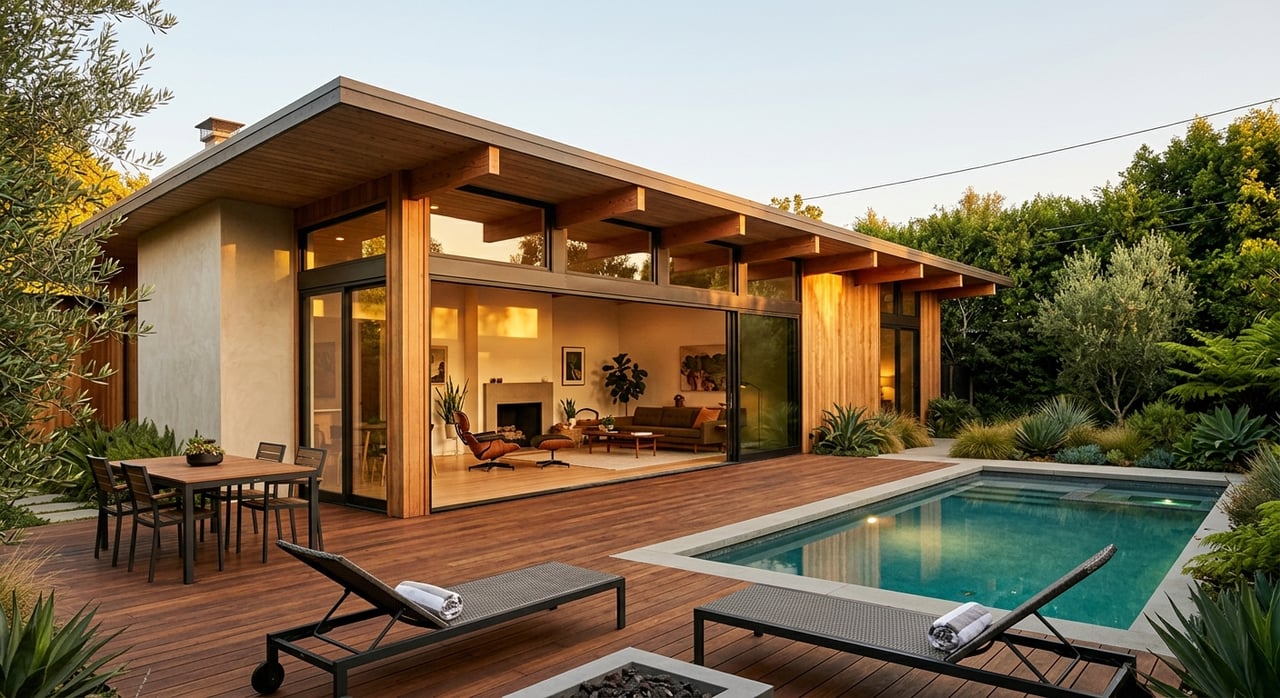
A true Eichler typically follows a very specific design language. Official Eichler neighborhood guidelines from Sunnyvale and Palo Alto describe common features such as post-and-beam construction, low roof plate heights, horizontal lines, slab-on-grade construction, radiant floor heating, and interior or entry atriums. Open floor plans and direct connections to the backyard are also typical.
From the street, Eichlers often look more restrained than people expect. Front façades usually have limited glazing, while the rear side of the home often opens up with large expanses of glass. Many also include integrated garages or carports, simple wood entry doors, vertical-grooved siding, low-pitched or flat roofs, and exposed beams.
Key Eichler Features to Look For
When you tour homes, these details can help you spot whether a property is likely a true Eichler or simply Eichler-inspired:
- Broad, low rooflines
- Strong horizontal design
- Post-and-beam construction
- Interior or entry atrium
- Slab-on-grade foundation
- Radiant floor heating
- Modest front-facing windows
- Large rear glass walls or full-height glazing
- Integrated garage or carport
- Vertical-grooved wood siding
If several of those traits are missing, the home may still be a great mid-century property. It just may not be an original Eichler.
Other Walnut Creek Mid-Century Areas
If you like the period but do not need a true Eichler, Walnut Creek offers other options worth watching. Parkmead is one of the most useful comparison neighborhoods from a mid-century perspective. The Parkmead Community Association says the neighborhood includes about 620 homes, most of them single-story ranch houses built in the 1950s.
Parkmead offers a different product than Rancho San Miguel. It is not an Eichler tract, but it can still appeal to buyers who want older homes with postwar character, practical layouts, and renovation potential. For some buyers, that flexibility is a plus.
Why Jurisdiction Matters
One of the most overlooked details in Walnut Creek home searches is jurisdiction. Not every home with a Walnut Creek address falls under the City of Walnut Creek. The city’s zoning information states that areas including Northgate, Saranap, the Pleasant Hill BART Station vicinity, and portions of Walnut Heights are outside city limits and instead fall under Contra Costa County jurisdiction.
That distinction can affect zoning, permits, and review authority. It is especially important when you are buying an older home that may have additions, enclosure work, or system upgrades completed over time. Before assuming a property follows city oversight, verify whether the parcel is in the city or unincorporated county.
Renovating an Eichler Carefully
Many buyers love Eichlers for their architecture but also want modern comfort. That balance is possible, but the best updates usually respect the home’s original composition. Eichler-focused design guidance from Sunnyvale recommends matching the original form and materials, keeping additions low-profile, and avoiding second-story changes that look visually disconnected from the home.
In practical terms, thoughtful renovation is usually less about reinventing the house and more about preserving what makes it special. Clean lines, roof form, window patterns, and material consistency all matter. A remodel that ignores those elements can reduce the home’s architectural clarity.
Window and Siding Updates
Windows and exterior materials are two of the most sensitive areas in an Eichler renovation. Sunnyvale’s guidance favors narrow-frame windows, sliding or casement units, and the retention of simple rectangular rhythms. It discourages double-hung windows, bay windows, divided-light patterns, snap-in grids, and projecting garden windows when visible from the street.
Siding matters too. Guidance notes that some homeowners use cut-and-grooved plywood to match original siding profiles, while others use alternatives such as MDO. The closer the replacement matches the original groove depth and thickness, the more cohesive the result tends to be.
Heating, Cooling, and Roof Considerations
Mechanical systems are another common update area. Many Eichlers were built with radiant heat and flat-roof assemblies, both of which can be harder to adapt than systems in conventional ranch homes. Sunnyvale’s guidelines identify ductless mini-splits, small-duct central systems, baseboard heat, and radiant tubing as retrofit approaches that can fit these homes more discreetly than large conventional duct systems.
Roof condition deserves close attention as well. The National Trust notes that flat roofs can be vulnerable to pooling water and may need replacement every 15 to 20 years. For buyers, that makes roof age, drainage performance, and any history of leaks important items to investigate.
What to Check Before You Buy
A well-kept mid-century or Eichler home can be an exceptional purchase, but older homes reward careful review. In Walnut Creek, due diligence should go beyond finishes and floor plans. You want to understand what is original, what has changed, and whether those changes were handled thoughtfully.
Here is a practical checklist to use during your search and escrow:
- Verify whether the home is a true Eichler, Eichler-style home, or mid-century ranch
- Review permit history and confirm whether additions were approved
- Check roof age, drainage, and any signs of pooling or leaks
- Ask about window replacements, siding work, and HVAC or radiant heat updates
- Confirm whether the property is within the City of Walnut Creek or in Contra Costa County jurisdiction
- If the home is near open space or hillsides, evaluate fire-hardening and defensible-space needs
Hillside and Open Space Considerations
Some Walnut Creek homes sit close to open space or vegetated edges, and that can change your evaluation process. The city says it manages more than 2,700 acres of open space around Walnut Creek. Its 2026 Safety Element Update discusses fuel reduction, fire risk, fire-resistant landscaping and building materials, wildfire prevention programs, and defensible-space style measures in higher-risk areas.
If you are considering a mid-century home near a hillside or open-space edge, look closely at roof condition, landscaping, and access for emergency vehicles. Also review whether prior remodeling improved fire resilience or introduced vulnerabilities. These are practical issues, not just maintenance details.
Permit Timing and Code Compliance
With older homes, permit timing can be just as important as permit status. Walnut Creek’s building codes page states that codes are updated regularly and that the permit application date determines which code set applies. Applications received on or after January 1, 2026 must meet the 2025 California Building, Residential, Mechanical, Electrical, Energy, Green Building, Wildland-Urban Interface, and Fire Codes.
For you as a buyer, that means remodeled homes may reflect different code standards depending on when work was submitted. If a property has been updated in phases over many years, it is worth understanding that timeline clearly. It can affect your renovation plans, your comfort level with prior work, and your next steps after closing.
Finding the Right Fit in Walnut Creek
The best Walnut Creek mid-century purchase depends on what you value most. If architectural authenticity is your top priority, Rancho San Miguel is the clearest place to focus. If you want mid-century character with a broader range of home styles, areas like Parkmead may offer appealing alternatives.
Either way, the smartest approach is to look beyond surface style. Roofs, windows, heating systems, atriums, siding, permits, and jurisdiction all shape the long-term ownership experience. When you understand those details, you can shop with more confidence and make better decisions.
If you are exploring Walnut Creek’s distinctive mid-century homes and want guidance grounded in local market knowledge, Khrista Jarvis Diebner can help you evaluate neighborhoods, property history, and the details that matter most in a competitive East Bay search.
FAQs
What makes a Walnut Creek home a true Eichler?
- A true Eichler in Walnut Creek is generally tied to Joseph Eichler’s original development history, especially in Rancho San Miguel, and often includes features like post-and-beam construction, low rooflines, an atrium, slab-on-grade construction, radiant heat, and large rear-facing glass.
Where should you look for Eichler homes in Walnut Creek?
- Rancho San Miguel is the most established Walnut Creek neighborhood to search for true Eichler homes, with documented Eichler development from 1955 to 1958.
Are all mid-century homes in Walnut Creek Eichlers?
- No. Walnut Creek also has many postwar ranch homes and Eichler-inspired properties that share some mid-century design features but are not original Eichlers.
Why does jurisdiction matter for older Walnut Creek homes?
- Jurisdiction matters because some Walnut Creek addresses are outside the City of Walnut Creek and fall under Contra Costa County, which can affect zoning, permits, and review authority.
What should you inspect in a Walnut Creek Eichler before buying?
- Focus on roof age and drainage, window and siding changes, radiant heat or HVAC updates, permit history, approved additions, and whether the home’s original design features have been preserved.
Do hillside Walnut Creek mid-century homes need extra review?
- Yes. Homes near hillsides or open space may need closer evaluation of fire-hardening, defensible space, roof condition, landscaping, and emergency access.