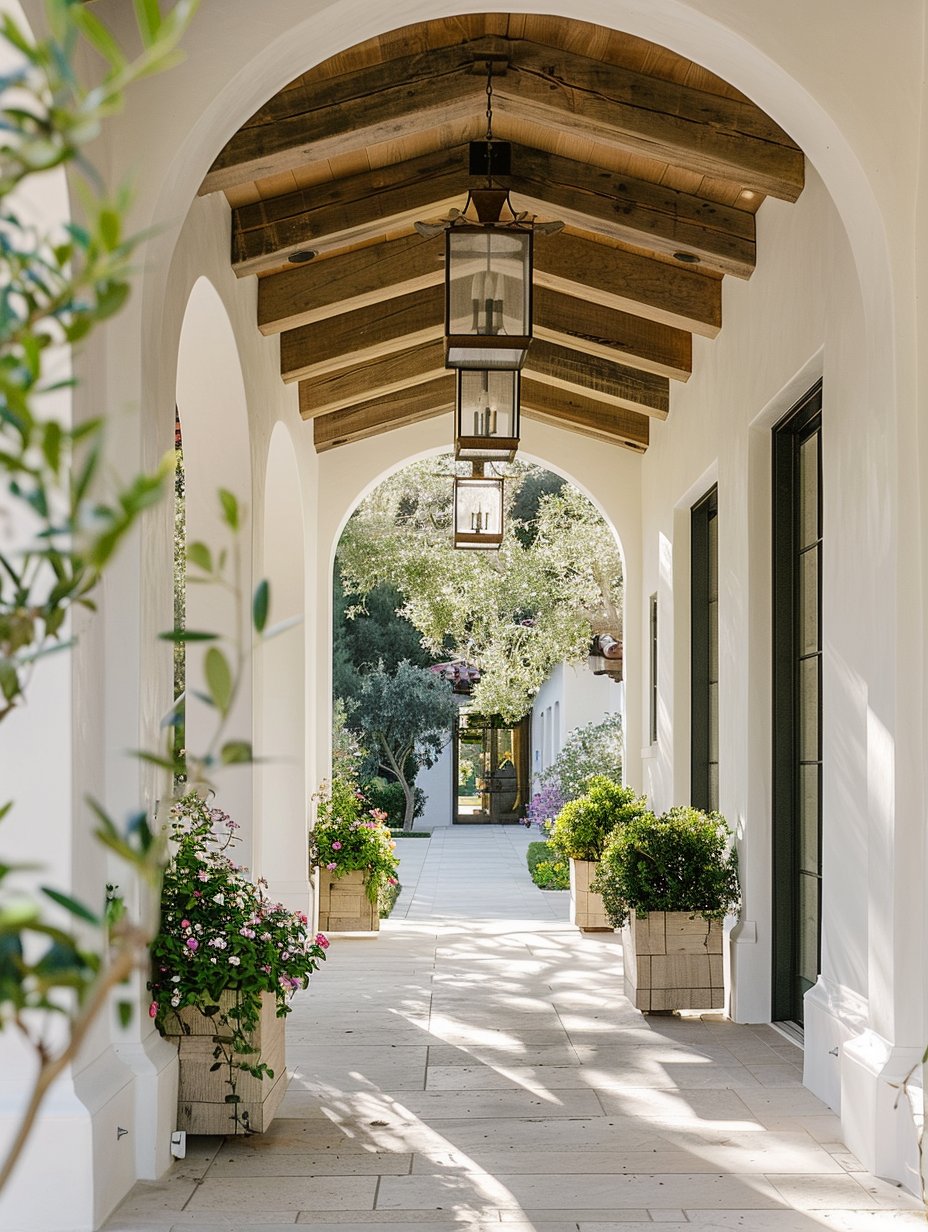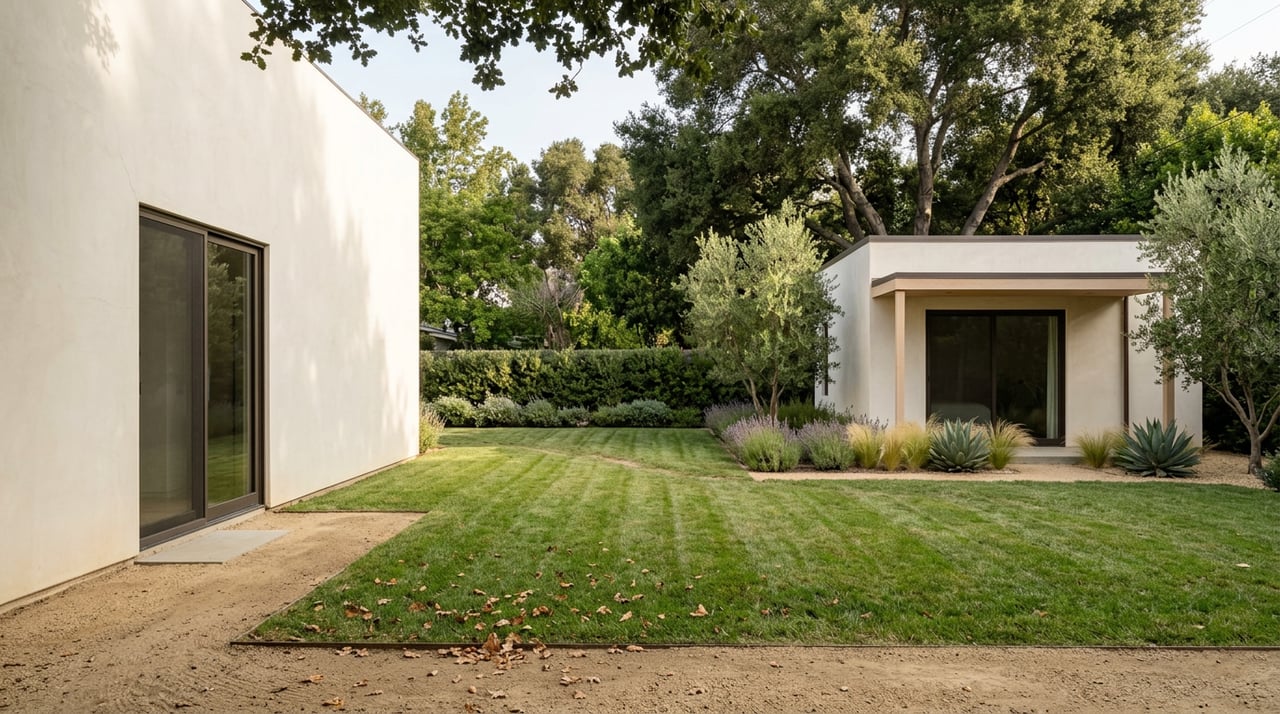
A homeowner in Alamo calls a contractor about adding a guest unit behind the main house. She braces for the usual story: small town, thin staff, slow calendar. Instead the contractor tells her the opposite is true. Because Alamo has no city hall, her project just got easier to build and larger than it would be two miles down the road in Danville.
That reversal is the part most people get backward. Alamo is unincorporated Contra Costa County, meaning there is no local planning department, no city council setting design rules, no municipal building office. Homeowners often read that as a disadvantage, evidence of a town too small to run its own affairs. On the specific question of accessory dwelling units, it works the other way. The county's rulebook, combined with how Alamo happens to be zoned, produces bigger, less restricted ADUs than what a homeowner in an incorporated town nearby would get on a similarly sized lot.
Who Actually Reviews Your Plans
Start with jurisdiction, because it decides everything downstream. Danville and Walnut Creek run their own building departments and their own plan check schedules. Alamo does not. Alamo, Diablo, and the rest of the county's unincorporated pockets fall under Contra Costa County's Department of Conservation and Development, headquartered at 30 Muir Road in Martinez, with applications filed through the county's ePermits portal. There is an Alamo Municipal Advisory Council, but it advises the county on local matters. It does not issue permits.
That single fact changes how a project moves. A contractor who works Danville regularly knows Danville's queue, Danville's reviewers, Danville's habits. In Alamo, everyone, resident or contractor, answers to the same county office that also handles unincorporated Diablo and dozens of other communities. The county's own guidance is direct on this point: check which jurisdiction a property sits in before assuming anything about timeline or process, because cities and the county run separate systems with separate rules.
| Alamo (unincorporated) | Danville / Walnut Creek (incorporated) | |
|---|---|---|
| Who reviews plans | Contra Costa County DCD | City building department |
| Where to file | County ePermits portal, Martinez office | City planning/building counter |
| Local design review | None, no city design board | City-specific design guidelines apply |
| ADU size cap on typical lot | 1,200 sq ft (lots 12,000 sq ft+) | Subject to that city's own ordinance |
The Math Behind the Bigger Unit
Contra Costa County rewrote its ADU ordinance in May 2025 to bring it in line with current state law. The rewrite happened to land well for Alamo specifically. The county's standard detached ADU cap is 1,000 square feet, rising to 1,200 square feet on any lot of 12,000 square feet or more. Alamo's conventional residential zoning, R-20 and R-40, starts at 20,000 square feet. That means nearly every conventionally zoned lot in town already clears the threshold for the larger unit before a homeowner has drawn a single wall.
The rewrite also removed a rule that used to require an ADU to architecturally match the main house, a requirement that had quietly limited what homeowners could build and how much it cost to build it. And it exempted attached garages from counting against the size cap at all: a homeowner can add 600 square feet of garage on most Alamo lots, 800 square feet on parcels of five acres or more, without that square footage touching the 1,200-foot ADU limit.
Setbacks tightened only where new construction is involved: 4 feet at the sides and rear. Converting an existing structure, a detached workshop or an old barn, avoids setbacks entirely and can add 150 square feet for entry and egress. Layer on top of that a separate, fully state-exempt 800-square-foot detached unit that can be built alongside a conversion ADU and a junior ADU on the same lot, and a single Alamo parcel can end up hosting more legal living space than most people assume county rules would ever allow.
The rulebook stopped trying to control what an ADU looks like. What is left to control is the land itself.
Where the Friction Actually Lives
None of this makes Alamo an easy build in the way a suburban tract lot is easy. The county's review is ministerial, meaning it approves what meets the standards without a discretionary hearing, but meeting the standards on an Alamo parcel means dealing with the property's own terrain first.
Fire review runs through the San Ramon Valley Fire Protection District, and the state's 2025 fire hazard severity maps place Alamo's hillside edges toward Las Trampas and the Diablo foothills in elevated zones. That triggers ignition-resistant construction and defensible-space requirements before the district signs off, which happens before the final building inspection, not after.
A few other things routinely slow an Alamo ADU project down even though the size caps are generous:
- Whether the lot is on septic or connected sewer, since septic capacity has to support the added unit
- Protected coast live oaks and their drip lines, which can require a county tree permit before grading starts
- Slope, which can trigger a geotechnical study and shift a project from a simple ministerial approval to a discretionary one
- HOA design input in gated communities like Stone Valley, Alamo Oaks, and Roundhill, where state law voids any CC&R provision that tries to block an ADU outright, though the association can still weigh in on reasonable, cost-neutral design details
For anything that touches a neighbor dispute or a code question before it becomes a county matter, the Alamo Improvement Association fields it first. Its code compliance advisor, Jack Behseresht, will take a call about a questionable project next door and route it to the county anonymously if the resident wants that. It is a small, distinctly local detail, but it means a homeowner rarely has to go straight to enforcement as a first step.
What This Means If You're Comparing Towns
For a buyer weighing Alamo against Danville or Walnut Creek with an ADU in mind, whether for a parent, a returning adult child, or rental income, the comparison usually starts and ends at the median price tag. That misses the part that actually determines what the property can become after closing. Realtor.com counted 52 Alamo listings in April 2026 with a median listing price near $2.87 million and a median of 23 days on market, figures that reflect a market still moving briskly at the high end. But the number that matters for an ADU plan is the lot size behind that listing price, because in Alamo it is doing more work than the sale price alone suggests.
A half-acre or full-acre Alamo lot carries a built-in advantage under the current county ordinance that a smaller-lot property in a neighboring incorporated city may not carry under its own local rules. The tradeoff is that the land itself, not the paperwork, becomes the thing worth investigating early. A septic system with no remaining capacity or a lot laced with protected oaks can erase the size advantage the zoning otherwise hands a buyer.
A Few Questions Worth Asking Before You Assume Anything
Does my HOA have final say over ADU design? No. State law voids any CC&R provision that would prohibit or unreasonably restrict an ADU, and bars an HOA from charging fees tied to one. An association can offer reasonable design input. It cannot block the unit outright.
What if my lot runs on septic instead of sewer? Septic capacity becomes the practical limit rather than the zoning cap. A county environmental health review is required before final approval, and it is worth confirming capacity before finalizing a floor plan rather than after.
Is an SB 9 lot split the same thing as an ADU? No. SB 9 allows a ministerial lot split and up to two units on a qualifying parcel, but it runs into the same slope, tree, and access constraints that shape any Alamo project, and each new parcel generally has to meet a minimum size threshold relative to the original lot.
Who do I call first, the county or the neighborhood? For a straightforward permit question, the county's Application and Permit Center in Martinez is the direct line. For a neighbor concern or an early read on a project before it becomes a formal matter, the Alamo Improvement Association is the local first stop.
Alamo's lack of a city hall reads, on paper, like a gap. On the specific question of what a homeowner can legally add to a property, it turns out to be the reason the answer is often more than expected. The Khrista Jarvis Team works with Alamo buyers and sellers who want to understand exactly what a lot can support before they write an offer or add a project to a listing. If you're weighing an Alamo property against one in a neighboring town and an ADU is part of the plan, schedule a complimentary white-glove consultation and bring the parcel details. That's where the real answer starts.